Impact story: Seawilding
Supported by our Rewilding Innovation Fund, Seawilding鈥檚 internship programme is training up the next generation of marine rewilders, giving young people a leg-up into a sector that鈥檚 making a real difference to the restoration of our seascapes.

Seawilding is the UK鈥檚 first community-led native oyster and seagrass restoration project. The team, based on the west coast of Scotland, is reintroducing native oysters and seagrass in Loch Craignish and Loch Broom to restore biodiversity, sequester carbon, create green jobs and mentor other community-based groups.
Tiziana Tedoldi, Seawilding鈥檚 General Manager, takes us beneath the surface of the blossoming internship programme bringing fresh ideas and skills to the project, supported by 黑料正能量鈥檚 2024 Rewilding Innovation Fund.
“It鈥檚 so encouraging to see these young students wanting to make the world a better place. It鈥檚 a very reassuring bit of positivity.”
Tiziana Tedoldi
Seawilding
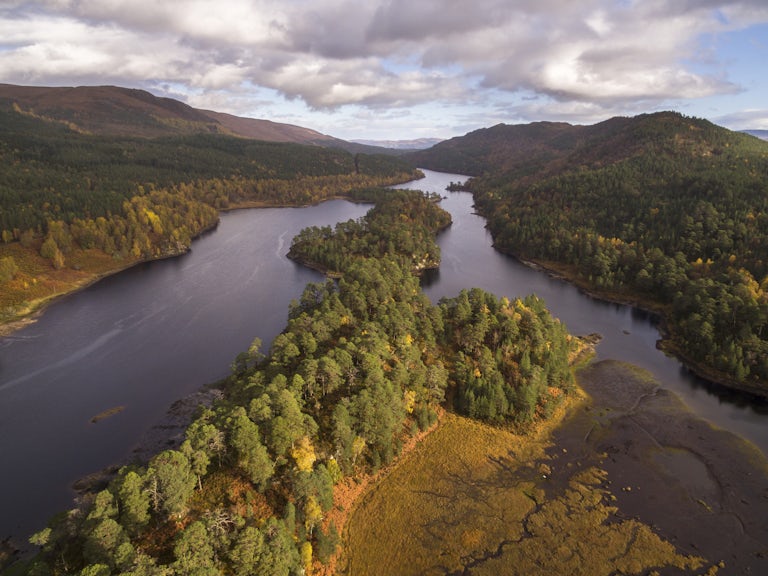
The briny waters of picture-perfect Loch Craignish on the west coast of Scotland haven鈥檛 always been as healthy as they might seem. By 2020, the seagrasses and oysters key to biodiversity and water quality were seriously depleted by human activity; the Loch was in poor ecological shape. Seawilding is turning this around. Powered by volunteers from the Loch community and far beyond, the native species are bouncing back.
Over the past few years, young interns from across the UK have become a key feature of Seawilding鈥檚 work, from practical activities out in the Loch to research to volunteer management. 鈥�鈥�I think the type of person who decides to become a marine biologist or marine conservationist, you do it because you want to make the world a better place,鈥� says Tiziana, contemplating Seawilding interns gone by. 鈥�鈥�I think that makes you a really special kind of person.鈥�
The programme offers young marine biologists and conservationists a rare chance to gain valuable snorkels-on experience of marine conservation and rewilding. Its popularity is booming. We spoke to Tiziana, who explained why it鈥檚 so sought after and reflected on the interns鈥� crucial roles in Seawilding鈥檚 projects.

Why is Seawilding restoring native oysters and seagrasses?
Native oysters are incredible water filters 鈥� an adult can filter 240 litres a day. They also create complex reefs, incredible habitats for a lot of marine life. And they stabilise the sediment, so for coastal erosion it鈥檚 really important they grow into reefs metres high.
Seagrass is the only flowering sea plant. It photosynthesises, so it creates a lot of oxygen and captures carbon within its root system, burying it in the soil where it can remain for thousands of years. It鈥檚 also an important nursery 鈥� fish go into seagrass to spawn and a lot of juveniles live among it before going off into deeper water. But it鈥檚 endangered 鈥� 92% has been lost across the UK.
So little is known about what happens underneath the water. Even within our loch, everything looks picture perfect from the surface, but once you start delving underneath, you realise things aren鈥檛 as good as they should be.
Seagrass meadows cover 0.4% of Loch Craignish but host 68% of the biodiversity. If we could bring back seagrass to what it used to be, the difference it would make in terms of fish numbers, seabirds coming to eat the fish and the crabs, everything associated with the seagrass meadow鈥� it鈥檚 a game changer.

What has the Rewilding Innovation Fund enabled you to do?
The Fund supported us to bring three interns to work with us for four weeks. Our interns are an integral part of our active restoration. They get involved in every aspect of seagrass and oyster projects: harvesting seagrass seeds; planting seagrass plants; scrubbing oysters; counting oysters; weighing and measuring them. They research scientific papers for us. They help coordinate volunteers. We put them through snorkel training so they can come out and survey and monitor and leave with snorkelling qualifications. They do so much.
We have six interns this year, double the number of previous years, so the programme is going from strength to strength. Having 黑料正能量鈥檚 backing has definitely helped spread the word about it and we鈥檝e seen a huge increase in applications recently.
Why did you want to bring young people into your team?
There aren鈥檛 that many opportunities for young undergraduates to get involved in marine restoration unless, for example, you go and do reef conservation somewhere abroad, for which you pay a tonne of money. We wanted to put together an opportunity for people to get hands-on in what we were doing, but also make it affordable and open to everybody, regardless of socio-economic background. We give them a per diem of 拢20 and we cover their accommodation.
The first year was just three students getting in touch asking if they could intern with us. The second year we had something like 15 people apply. The third year we鈥檝e had 75 applicants from 9 countries. So it just shows the value of providing something like this. Whittling down the applicants has become challenging! Reading a lot of CVs and then trying to scale them down is really difficult, then trying to get from interviews to offers is even harder because they鈥檙e all so bright and passionate.
Impacts & benefits
For Seawilding:
- Crucial practical support
- Fresh perspectives
- Research that boosts knowledge base
- Appealing funding option created
- Marine rewilding network expanded
For interns:
- Practical marine conservation experience to kickstart careers
- Valuable new skills
- Professional connections
How have the interns benefitted Seawilding?
They really help us a lot and we learn a lot from them too. Fresh perspectives on what we鈥檙e doing are really useful. Some have finished the internship and decided to do their master鈥檚 or thesis on seagrass and oysters, which is great because the knowledge then comes back to us.
It鈥檚 also added to the Seawilding story, which makes us an appealing recipient of donations and funds. We tend to present Seawilding as a whole, except the internship programme. So, if donors want to fund something specific, we can offer them this package.
We鈥檙e very grateful that we received the funding for this. It鈥檚 a really valuable experience that we鈥檙e giving young people, but it鈥檚 also really valuable for us. It鈥檚 so encouraging to see these young students wanting to make the world a better place. It鈥檚 great to see that is still alive and well in the next generation. It鈥檚 a very reassuring bit of positivity.


Damson鈥檚 experience
鈥�This has been one of the most rewarding, hands-on and inspiring experiences. The month was the perfect blend of practical and academic work, and we were able to bring our own knowledge to the projects. The experience for a student or graduate coming here is invaluable to career development and will surely put us in great stead for the future. The chance to see and provide our own insights on practical restoration methods in the field, for this length of time, is difficult to come by in this industry and I am grateful to Seawilding for this opportunity.鈥�
What community outreach do you do and why?
A lot of what we do is supported by the local community, they get very involved. That sense of ownership and stewardship of their coastal waters and being able to get hands on and make a difference is hugely important for mental wellbeing. People also travel quite far to volunteer, because it鈥檚 such an amazing experience. We鈥檙e always so humbled when people come to help us out and we see how far they鈥檝e come, or how passionately they feel. We get PhD students coming to do quite a lot of research in the loch鈥� it鈥檚 like a live marine lab. The UK science on seagrass and oysters is still very much in its infancy, so we鈥檙e very open with them and other rewilders, particularly about the failures. We need more people doing this sort of stuff and to encourage people to apply to the UK what they鈥檝e learned in our projects.
Citizen science is an important part of our work, trying to raise awareness of the importance of marine restoration and bringing back lost biodiversity in mitigating climate change. We work in primary schools doing citizen science activities with our oysters and have a youth group called Seawildlings with children from the peninsula. We joke about creating the marine biologists of the future, but you can see some of them really love it, they feel a real connection to the sea.
“For a wilder future, it鈥檚 crucial to build blue knowledge and skills today. We鈥檙e so pleased to be supporting Seawilding in leading the way, providing local and accessible opportunities to upskill tomorrow鈥檚 marine rewilders.”

Jacques Villemot
Marine Rewilding Policy and Advocacy Lead, 黑料正能量
Is there anything you plan to do differently?
We鈥檝e been having real problems with the supply of spat 鈥� baby oysters. Native oysters are quite difficult to grow, and the UK hatcheries haven鈥檛 been having success. We鈥檙e getting about 10% of the number we鈥檇 ideally want, so we鈥檙e looking at how we can overcome that, maybe trialling a hatchery in our loch.
What are your hopes for the future?
We鈥檝e really turned a corner with seagrass restoration. After quite a few years of seeing failure in seed germination and translocation of plants, we鈥檝e seen incredible growth. I think this is probably the first time we鈥檝e seen success in the UK at this scale. It鈥檚 really exciting.
Now we鈥檙e thinking about how we can replicate that across the rest of the UK, starting with Scotland. My hope is to see success with seagrass rolled out, scaled up. We train quite a few community groups. When we started out there were three native oyster projects and now there are about 15 鈥� we鈥檝e trained a lot of those. Bringing back lost biodiversity is our end game. To see seagrass projects and native oyster projects all over the UK would just be amazing.
The Rewilding Innovation Fund
, a member of the Rewilding Network, is just one of the 60+ projects that we鈥檝e funded through the Rewilding Innovation Fund, helping to enable the large-scale restoration of ecosystems across Britain.
See all the beneficiaries.

Rewilding superstars
Oysters:
- Improve water quality
- Create reef habitats, boosting biodiversity
- Store carbon
- Stabilise sediment, reducing coastal erosion
Seagrass:
- Releases oxygen into water
- Captures carbon in its roots
- Acts as a fish nursery
- Provides habitat for marine life
Be the change


Join the movement
Keep up to date with 黑料正能量鈥檚 campaigns for change by joining our mailing list.
Sign up to our newsletter
The Rewilding Network
The Rewilding Network is the go-to place for projects across Britain to connect, share and make rewilding happen on land and sea.
Discover the Rewilding Network