Rewild to Recover
Tell UK Government: we must Rewild to Recover from extreme weather.

Severe drought, heartbreaking wildfires, and now flash floods and storms.
The climate crisis is making our already degraded, broken landscapes vulnerable to extreme weather, unable to hold water and keep us safe.
But where rewilding is taking root, we see proof that wilder landscapes protect us.
- Restored peatlands and beaver wetlands are holding back drought, fires and floods.
- Revived native, diverse woodlands act as natural buffers, cooling the area around them for surrounding communities.
- Re-wiggled rivers and reconnected floodplains soak up heavy rain, stopping water in its tracks before it reaches homes downstream.
- Natural grazing with native herbivores, including cattle, horses, bison and elk creates a mosaic of habitats which make landscapes more resilient to extreme weather.
We鈥檙e demanding urgent action: the UK Government must back rewilding as a vital climate change solution.
of Brits want the government to invest more in nature restoration to address future extreme weather
Speak up for rewilding: Sign the open letter
Rewilding is one of our most hopeful solutions to the climate and nature crisis 鈥� helping keep our wildlife, homes, farms and communities safe from destructive fires, flash floods and scorching summers.
Will you call on the UK government to rewild Britain for a safer future? We鈥檙e demanding that they:
- Rewild our response to extreme weather: Put nature recovery at the heart of how we prepare for and prevent climate shocks.
- Reinvest in our landscapes: Create a Climate Shock Fund to restore nature and make Britain more resilient against floods, fires, water shortages and days of extreme heat.
It only takes 2 minutes. Your action today will help us secure a safer, wilder future.
We鈥檙e demanding urgent action: the UK Government must take rewilding seriously and restore nature to keep our towns, farms and families safe from extreme weather.
Supporter Q&A
Find out everything you need to know about the campaign.
There are two actions you can take.
First, sign our letter to the Prime Minister to聽put rewilding and large-scale nature recovery at the heart of how Britain prepares for and prevents climate shocks, to聽make Britain more resilient to floods, drought, wildfire, water shortages and extreme heat. We are asking for a Climate Shock Fund to restore nature and make Britain more resilient against extreme weather.聽聽聽
Second, email your local MP, MSP (Scotland) or MS (Wales) and ask them to champion rewilding and nature-based solutions in Parliament and with ministers in response to Britain鈥檚 extreme weather challenges.
This includes supporting the Climate Shock Fund, as well as making sure rewilding and nature recovery are at the heart of future government plans for adaptation to climate risks.
Together, the two actions put pressure directly on political decision makers and seeks to build political support for using rewilding and nature-based solutions to strengthen Britain鈥檚 climate resilience.
We can't prevent every flood, particularly as extreme rainfall becomes more severe. But we can change how quickly water moves through our landscapes.
Restored wetlands and floodplains give water somewhere to go. Healthier soils can absorb more rainfall. Trees and vegetation can slow water moving through a catchment. Beaver-created wetlands can store and slow water before it reaches communities downstream.
Nature-based solutions won't replace every conventional flood defence, but they can work alongside them and help reduce the pressure on our rivers and communities.
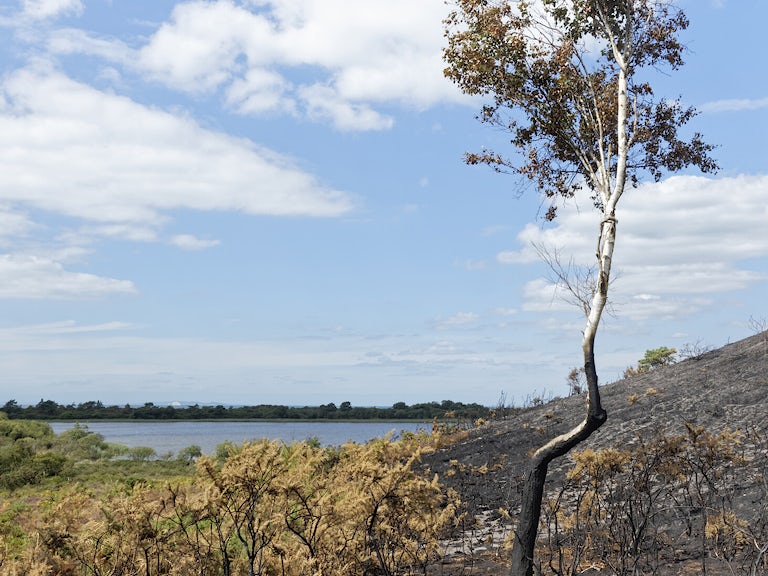
How we manage our landscapes can influence both their vulnerability to wildfire and how severely fires burn.
Restoring degraded landscapes, including rewetting peatlands and creating healthier, more naturally functioning habitats, can help build resilience to drought and fire.
That's why we're asking the Government to look beyond emergency response. Preventing and reducing wildfire risk through landscape recovery should be part of Britain's wildfire strategy too.
This is particularly important in towns and cities.
Trees provide shade and cooling, while parks, wetlands and other green spaces can help reduce the urban heat-island effect, where built-up areas become significantly hotter than their surroundings.
Creating greener, more nature-rich neighbourhoods can help make communities safer and more comfortable during extreme heat, while also helping wildlife and absorbing rainfall during storms.
As ongoing extreme weather events have demonstrated, Britain urgently needs to invest far more in preparing and adapting for a changing climate.
The Climate Change Committee estimates that the UK needs around 拢11 billion of additional investment every year in climate adaptation, from public and private sources.
We're calling for a major new Climate Shock Fund to deliver substantial investment in nature-based solutions that restore landscapes and coastal areas and help towns and cities better protect people and places from extreme weather.
It isn't intended to cover Britain's entire climate adaptation bill. But it should be significant enough to deliver meaningful change at scale, helping restore natural defences and make communities and landscapes more resilient to the climate shocks we increasingly face.
We absolutely need well-resourced emergency services and effective flood protection. But we also need to tackle the conditions that make communities vulnerable before climate shocks strike.
Firefighters, sandbags and emergency responses are vital when extreme weather hits, but they largely deal with the consequences. Rewilding and nature-based solutions can help reduce the risk and severity of those impacts in the first place.
This isn't about choosing nature instead of firefighters or flood barriers in towns and cities. It's about investing in prevention alongside emergency response. As extreme weather becomes more frequent and severe, we need to make our landscapes and communities more resilient so we're not simply responding to the next crisis after it happens.
We're calling for a major new Climate Shock Fund capable of supporting nature-based climate resilience at scale.
We aren't prescribing a specific figure. The size and design of the Fund will ultimately be decisions for the UK Government, in collaboration with the devolved administrations in Scotland and Wales. But it needs to match the scale and urgency of the challenge and provide substantial new investment in making communities and landscapes more resilient.
The Fund should be established rapidly so that investment can begin flowing into projects that protect communities and restore Britain's natural defences against extreme weather.
We're calling on the Government to create a major new Climate Shock Fund, but we are not prescribing how it should be financed. Decisions about the appropriate funding mechanism are ultimately for the Government and Treasury.
Our focus is on the need for substantial investment in nature-based climate resilience and what that investment should achieve.
The Climate Shock Fund would invest in nature-based solutions that make our landscapes, towns and communities more resilient to extreme weather, in particular rewilding and restoring natural processes.
That includes restoring and rewetting peatlands and wetlands; reconnecting rivers with their floodplains; allowing rivers to follow more natural courses; restoring and expanding woodlands; natural grazing with low numbers of native herbivores (e.g. cattle and horses); bringing beavers back to suitable river catchments; and restoring other habitats that can absorb, store and slow water.
It will also include nature-based solutions in towns and cities. More trees, vegetation, wetlands and nature-rich green spaces can provide shade and cooling during extreme heat, help tackle the urban heat-island effect, absorb heavy rainfall and reduce pressure from surface-water flooding.
This isn't simply about creating more habitat. It's about restoring nature in ways that help protect people.
The purpose of the Fund is climate resilience through nature.
Rewilding and large-scale nature recovery would play a central role because healthy natural systems can provide vital protection against extreme weather.
Wetlands and floodplains can store water. Healthy peatlands can retain moisture. Woodlands, vegetation and healthy soils can slow and absorb rainfall. Trees and green spaces can cool towns and cities. More naturally functioning landscapes can also be more resilient during drought and periods of wildfire risk.
So this is investment in nature, but it's also investment in protecting our聽homes, farms, and communities from destructive fires, flash floods, and scorching summers.
This isn't an either/or choice.
Britain will continue to need engineered flood defences, more reservoirs, resilient infrastructure and strong emergency services.
But conventional infrastructure can't solve every problem everywhere. Nature-based solutions can work across whole landscapes and river catchments and often address several problems simultaneously.
A restored wetland, for example, can hold water during heavy rainfall, retain water during dry periods, provide wildlife habitat and store carbon. We need natural defences alongside built defences.
The scale of the climate challenge means we need greater investment in resilience, not simply to move money between existing priorities.
Existing nature, farming, flood and environmental budgets already have important jobs to do. The Climate Shock Fund should provide the additional impetus and investment needed to restore natural defences and prepare communities for worsening floods, fires, drought and extreme heat.
The two actions do different jobs.
Signing the letter to the Prime Minister builds public pressure for the Climate Shock Fund and asks the Government to put rewilding and nature recovery at the heart of Britain's response to extreme weather.
By emailing your local representative asking them to champion that approach in Parliament and with ministers, you are pushing them though for rewilding and landscape scale nature-based solutions in national adaptation plans, and making sure rewilding is part of the Government's approach to upcoming wildfire events and plans.
One builds public pressure on the Government. The other helps carry that pressure into Parliament.
Yes. Decision makers pay attention to what their constituents contact them about.
The more decision makers who hear that people want greater investment in natural solutions to floods, fires, drought and extreme heat, the stronger the political pressure becomes for ministers to act. Your local representative can also help get rewilding in Britain鈥檚 future adaptation plans.聽
Signing the letter sends the message to the Prime Minister. Emailing your representative helps make sure that message is heard in Parliament too.
Go a step further
Thank you for acting wild.