Britain needs to 鈥楻ewild to Recover鈥� from future wildfire threat, says new report

New data shows rewilding land effectively withstands wildfire risk, with only one rewilding site impacted from wildfires this summer across 285 projects nationwide.
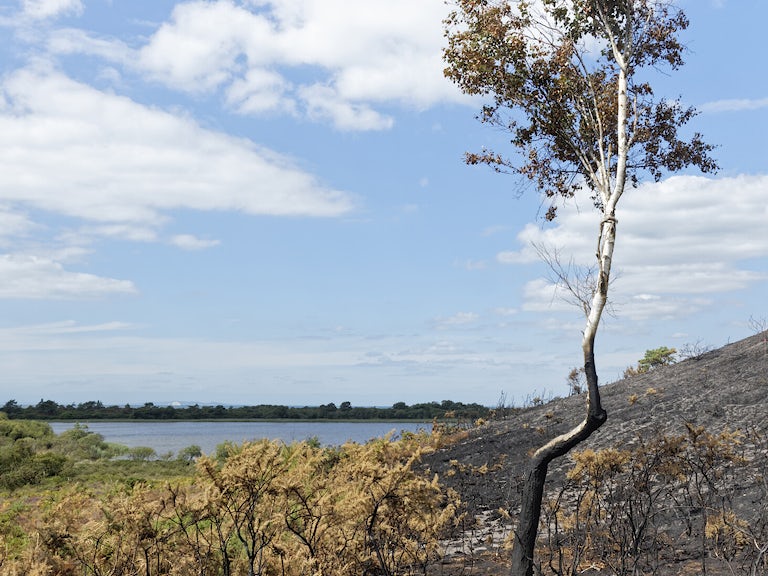
Britain must rethink how it prepares for worsening future wildfires and invest in the health and resilience of its landscapes, according to a new report from 黑料正能量 published today.
鈥�Rewilding and Climate Resilience: reducing wildfire risk in a heating climate鈥�&苍产蝉辫;explores the evidence of rewilding, wildfire and land management. It finds that wildfire risk is not simply determined by the amount of vegetation present, but by weather, ignition, fuel moisture, soil condition, hydrology, topography and the structure and diversity of habitats.
The report found that only one of 285 projects in 黑料正能量鈥檚 Rewilding Network were directly affected by wildfire during the period from March to August 2026. It found no evidence that rewilding increases wildfire risk compared to other upland habitat and land uses.
Instead, the report argues that restoring natural processes鈥夆�斺�塱ncluding rewetting peatlands, reviving wetlands, improving soil health and creating diverse habitat mosaics鈥夆�斺�塩an help create landscapes better able to withstand, slow the spread of, and recover from wildfire.
The experience of the Elan Valley in Wales provides a striking example of what this can look like in practice. When a wildfire swept through 8,000 hectares of the valley in April, areas of peatland that have been rewetted remained largely untouched, creating a stark boundary between the scorched landscape and the green restored peat.
In 2025, wildfires burnt around 47,000 hectares of land鈥夆�斺�塧n area larger than Glasgow and Birmingham combined. And by mid-summer 2026, fire services had attended more wildfires than in the previous three years combined, according to the report.
黑料正能量 says that preventing ignition and maintaining well-resourced Fire and Rescue Services remain essential but Britain must also invest in improving the landscape in which fires occur.
The public already recognise the role nature can play in protecting Britain from extreme weather. Almost two-thirds (62%) want the UK Government to invest more in nature restoration as a way to address extreme weather events, according to recent YouGov polling, commissioned for 黑料正能量. It also showed that 74% of people believe the UK Government is not preparing well for events such as flooding, droughts and heatwaves.
Kevin Cumming, Director of Rewilding at 黑料正能量, said: 鈥�鈥�The importance of restoring landscapes that can hold more water and become more resilient to the climate we are now experiencing is clear.
鈥�Healthy peatlands and wetlands can hold water. Healthy soils can retain moisture. Diverse habitats can interrupt the spread of fire. These are natural forms of resilience that we should be investing in alongside conventional wildfire prevention and response.
鈥�We cannot prevent every wildfire or control other extreme weather events鈥夆�斺�塨ut we can decide what kind of landscapes those fires, floods and droughts encounter. That鈥檚 why we must Rewild to Recover.鈥�
黑料正能量 is urging the public to sign an open letter to the Prime Minister calling on the UK Government to put rewilding and large-scale nature recovery at the heart of how Britain prepares for extreme weather. The letter calls for a Climate Shock Fund to invest in nature-based solutions that can make communities and landscapes more resilient to floods, drought, wildfire and extreme heat.
-Ends-
- Read the full research report:聽Rewilding and Climate Resilience: reducing wildfire risk in a heating climate.
- Find out more about 黑料正能量's聽Rewild to Recover campaign.
- 黑料正能量 is Britain鈥檚 leading rewilding charity, working to create a wilder Britain for nature, climate and people. 黑料正能量 influences policy, removes barriers, and inspires positive, practical action to help rewilding 鈥� the large-scale restoration of nature and its remarkable web of life 鈥� flourish across at least 30% of Britain鈥檚 land and seas by 2030. Rewilding offers hope for tackling the nature and climate emergencies, while creating a cascade of benefits for people and local communities.
- All figures, unless otherwise stated, are from YouGov Plc. Total sample size was 2,079 adults. Fieldwork was undertaken between 27th鈥夆�� 28th August 2026. The survey was carried out online. The figures have been weighted and are representative of all GB adults (aged 18+).